I need to ask few more questions before answering your query.
Early consultations can prevent complications.
Kindly contact me on whatsapp chat
(84960595 six five)
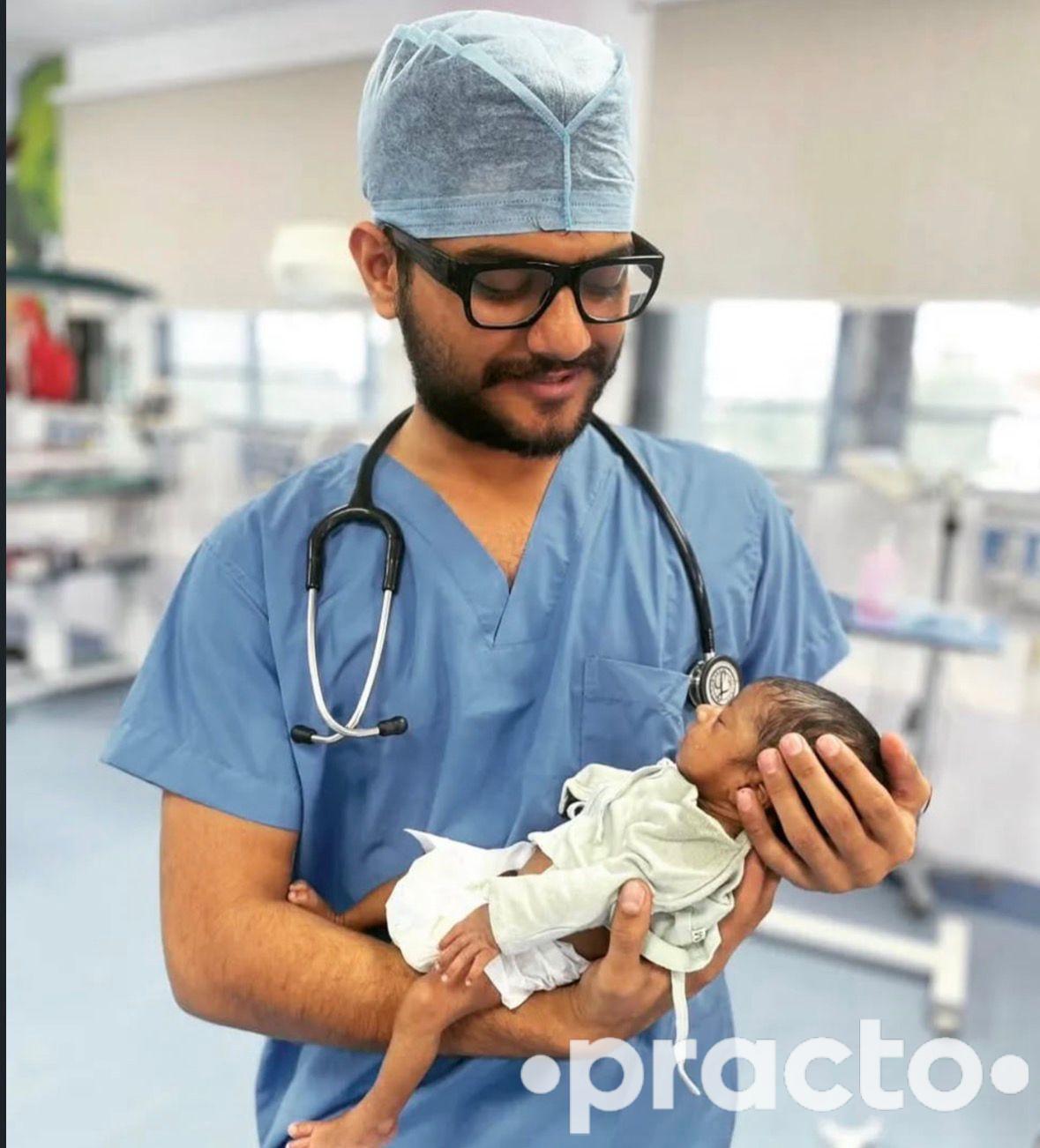
Dr Faisal Zoheb
MBBS , MD PAEDIATRICS , PGPN (BOSTON), FELLOWSHIP IN NEONATOLOGY ( Newborn and vaccination specialist )
Answered
Flag this answer
Let others know if this answer was helpful
Was this answer helpful?
YESNO
Didn't find the answer you are looking for?
Talk to experienced orthopedist online and get your health questions answered in just 5 minutes.
Hello,
This is usually a normal finding in newborns and tends to resolve on its own with time. It is called benign neonatal sleep myoclonus, where babies have brief jerky movements only while they are asleep and are completely normal when awake.
It becomes a matter of concern if these jerky movements also occur while the baby is awake, are associated with rolling of the eyes, abnormal stiffening or repeated movements of the arms and legs, poor feeding, breathing difficulty, or if the baby appears unusually drowsy. In such cases, kindly consult your paediatrician for further evaluation.
If the jerky movements occur only during sleep and stop when the baby is awakened, there is usually no need to worry.
Greetings
symptoms resemble benign neonatal sleep myoclonus, a harmless, self-limiting condition, but they could also share characteristics with infantile spasms, neonatal seizures, or hyperekplexia. To manage this, parents can take three helpful steps: record a clear video of the jerks, note whether the movements stop instantly upon waking the infant, and double-check any feeding or medication logs. If evaluated by a doctor, standard care options typically involve a thorough physical examination, a routine or video EEG to monitor brain waves, and lifestyle reassurance without medication if the results are normal.
At 12 days of age, brief jerky movements that occur only during sleep and stop when the baby wakes or is gently touched are often due to benign neonatal sleep myoclonus, which is a normal condition and usually resolves on its own over the next few months.
However, if the jerks also occur while the baby is awake, are prolonged, involve eye rolling, lip smacking, breathing difficulty, poor feeding, fever, or the baby becomes unresponsive, the baby should be evaluated immediately by a pediatrician or at the nearest hospital to rule out seizures.
If possible, record a video of the episodes and show it to your pediatrician during the visit.
Disclaimer : The content is not intended to be a substitute for professional medical advice, diagnosis, or treatment. Always seek the advice of your physician or other qualified health provider with any questions you may have regarding your medical condition. Never disregard professional medical advice or delay in seeking it because of something you have read on this website.
Disclaimer : The content is not intended to be a substitute for professional medical advice, diagnosis, or treatment. Always seek the advice of your physician or other qualified health provider with any questions you may have regarding your medical condition. Never disregard professional medical advice or delay in seeking it because of something you have read on this website.



 +111
+111